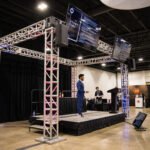



If you’re planning a conference, trade show, or major corporate event at a convention center, you’re probably thinking about photography. But what exactly should you expect from a convention center photographer, and how do you find the right one?
Convention center photographers specialize in capturing fast-paced, high-energy events in large venues. They work in challenging lighting conditions, move through crowds, manage multiple simultaneous activities, and deliver polished images that document your event professionally. This is different from typical event photography because convention centers present unique technical and logistical challenges.
Related: Convention Photographers: What They Do & How to Hire One
What Convention Center Photographers Actually Do
Convention center photographers don’t just show up and click a button. They’re there to tell your event’s story through carefully captured moments.
Your photographer will capture keynote speakers on stage, attendee networking moments, booth interactions, and candid reactions throughout the day. They document the energy and energy of your event from start to finish, positioning themselves to catch authentic moments without disrupting your program.
Beyond basic event coverage, many convention center photographers also offer on-site services like executive headshots, photo booth rentals, and branded content creation. If your event includes a VIP lounge, networking reception, or sponsor showcase, your photographer can pivot between these different environments and demands.
The work happens fast. Convention centers are busy spaces with poor lighting in some areas, harsh overhead lights in others, and constantly changing backgrounds. A professional knows how to adjust on the fly and still deliver sharp, well-composed images.
Why Lighting and Equipment Matter
Convention centers are notoriously tricky for photography. You’re dealing with mixed lighting temperatures, shadows across stages, and fluorescent or LED overhead lights that can make skin tones look flat or washed out.
Professional convention center photographers bring specialized equipment and technical knowledge to handle these conditions. They use fast lenses to work in low light, external lighting rigs to add fill light to keynote speakers, and camera bodies that perform well under challenging color temperatures. They also understand posing and positioning to make your attendees and speakers look their best, even in difficult lighting.
Experienced photographers also know how to work with your venue’s A/V team and event coordinators. They understand sight lines, camera positions on stage, and how to capture content without blocking live streams or interfering with your program.
What to Look for When Hiring
Start by asking potential photographers about their experience with convention centers specifically. Not all event photographers have worked in large venues. The skills needed to photograph an intimate corporate dinner are different from those needed for a 2,000-person conference with multiple breakout sessions.
Related: Corporate Meeting Photographer: What You Need to Know
Look at portfolios that include convention center events, trade shows, and large conferences. Pay attention to image quality in challenging lighting, composition during crowded moments, and consistency across a full day of coverage. You want to see that they capture both polished moments and authentic energy.
Ask about their workflow. How do they deliver images? How quickly? Do you own the rights to use photos for marketing, social media, and internal communications? What happens if they need a backup photographer due to illness or emergency? These details matter when you’re planning content around your event.
When you talk to photographers, ask specific questions about your event. How would they handle your particular venue? Do they have experience with your type of event? Are they familiar with your industry? A photographer who’s worked dozens of tech conferences will approach your tech conference differently than someone with no tech industry experience.
How Many Photographers You Actually Need

For small events under 200 people, one experienced photographer can usually cover the whole day. They’ll capture keynotes, networking, and key moments without anyone feeling like they’re being filmed.
Medium events of 200-500 people often benefit from two photographers. This lets one person focus on stage content while the other roams the floor capturing attendee interactions and booth highlights. Two photographers also ensure coverage during breaks or simultaneous sessions.
Large conventions with multiple tracks, breakout sessions, or VIP areas should plan for two to four photographers depending on the schedule and layout. When sessions run simultaneously or your venue spans multiple floors, you need enough coverage to capture everything that matters to your organization.
If you want to include photo booth rentals or on-site headshots alongside event coverage, factor that into your photographer count. Monarch Event Photography can help you figure out the right coverage level for your specific event and goals.
Building a Content Strategy Around Your Photos
Professional photography is only valuable if you actually use it. Think about how your photos will serve your organization after the event ends.
Will you use images for social media during and after the event? Plan to request quick turnaround on a first batch of photos for immediate posting. Do you need images for marketing next year? Make sure your photographer understands which moments matter most to your team.
Some organizations use event photos in annual reports, on their website, and in internal communications. If this is you, discuss it with your photographer upfront so they prioritize capturing diverse moments that represent your organization well.
You might also want photos to protect your organization. Convention centers see a lot of foot traffic, and sometimes you’ll want documentation of attendance, setup, or attendee behavior. Professional photography gives you clear records of your event.
Common Questions About Convention Center Photographers
Do convention center photographers need special permissions or venue agreements?
Yes. Most convention centers require approval before photographers can access certain areas, use external lighting, or position equipment. Your photographer should work with the venue and your event coordinator to handle these logistics. Some venues have restrictions on flash or lighting rigs in certain spaces, and a professional will know how to work within those constraints. Make sure this is discussed during your planning phase so there are no surprises on event day.
What if your event includes a live stream or broadcast?
Your photographer needs to coordinate with your A/V and broadcast teams. They should know where cameras and lighting are positioned so they don’t interfere with shots, and they should understand how to stay out of sight lines. Monarch Event Photography has experience working alongside broadcast and A/V teams on complex corporate events, which matters if your event includes live streaming or professional video production.
How do you know if image quality is actually good?
Look for sharp focus on people’s faces and eyes, accurate skin tones, proper exposure even in mixed lighting, and thoughtful composition. Backgrounds should feel intentional, not distracting. If you look at a photographer’s portfolio and images feel blurry, washed out, or poorly framed, that’s a sign they might not have the technical skills convention center photography demands. Don’t be shy about asking for a test shoot or sample photos from a similar event type.
What should you discuss about usage rights and image delivery?
Get a written agreement that clearly states who owns the images and how you can use them. You want full usage rights to market your event, post on social media, include in presentations, and archive for organizational records. Discuss delivery format (digital files, cloud storage, external drive), timeline (how fast you need images), and backup protocols. These details prevent misunderstandings and ensure you can actually use your photos the way you planned.